
Quick answer
Embedded analytics integrates BI dashboards, charts, and data visualisation directly into the applications users already work in—no switching to separate tools. Users see contextual insights within their CRM, ERP, or SaaS product. FireAI supports embedded analytics through APIs, letting Indian SaaS companies and internal teams add AI-powered dashboards to their existing workflows.
Embedded analytics integrates business intelligence and data visualization capabilities directly into software applications, products, or workflows. Instead of requiring users to switch to separate BI tools, embedded analytics provides contextual insights within the applications users already work in, enabling data-driven decisions without disrupting workflow.
Embedded analytics represents a fundamental shift in how organizations deliver data insights to end users. Rather than requiring users to navigate to separate business intelligence platforms, embedded analytics brings analytical capabilities directly into the applications and workflows where decisions are made. This integration uses data visualization and business dashboards to create a seamless, contextual experience that enhances productivity and decision quality.
What is Embedded Analytics?
Embedded analytics is the integration of business intelligence, data visualization, and analytical capabilities directly into software applications, products, or business workflows. Unlike standalone BI tools that require users to leave their primary work environment, embedded analytics provides insights within the context of the application users are already using, making data analysis a natural part of the user experience.
The embedded approach transforms analytics from a separate activity into an integrated capability. Users can view dashboards, explore data, and generate reports without switching applications or learning new interfaces. This integration creates a more intuitive experience where insights appear exactly when and where they're needed.
Core Characteristics
Seamless Integration: Analytics capabilities are woven into the application interface, appearing as native features rather than external add-ons. Users don't perceive analytics as a separate tool but as part of the application itself.
Contextual Relevance: Insights are presented within the context of the user's current task. A sales representative viewing a customer record sees relevant sales analytics for that customer, not generic dashboards.
White-Label Capability: Embedded analytics can be branded to match the host application's design, creating a cohesive user experience that doesn't reveal the underlying analytics platform.
API-Driven Architecture: Modern embedded analytics relies on APIs and SDKs that enable developers to integrate analytical capabilities into applications without building analytics infrastructure from scratch.
User Experience Consistency: The analytics interface matches the host application's design language, navigation patterns, and interaction models, ensuring users feel at home.
How Embedded Analytics Works
Integration Architecture
Embedded analytics platforms provide several integration approaches:
iFrame Embedding: The simplest method involves embedding analytics dashboards within iframes. While straightforward, this approach can create challenges with authentication, responsive design, and user experience consistency.
JavaScript SDKs: Modern platforms offer JavaScript SDKs that enable deeper integration. Developers can embed individual charts, create custom visualizations, and build analytics experiences that feel native to the application.
REST APIs: Backend integration through REST APIs allows applications to fetch data, generate reports, and manage analytics programmatically. This approach provides maximum flexibility for custom implementations.
Component Libraries: Pre-built React, Vue, or Angular components enable developers to add analytics capabilities using familiar frameworks and patterns.
White-Label Solutions: Complete analytics platforms can be embedded with custom branding, allowing software vendors to offer analytics as a native feature of their products.
Authentication and Security
Embedded analytics must handle security seamlessly:
Single Sign-On Integration: Users authenticate once in the host application, and embedded analytics inherits those credentials without requiring separate login.
Row-Level Security: Access controls ensure users only see data they're authorized to view, maintaining security even when analytics are embedded.
Token-Based Authentication: Secure token systems enable embedded analytics to validate user identity and permissions without exposing credentials.
Data Isolation: Multi-tenant applications require data isolation to ensure customers only access their own data, even when analytics are embedded.
Customization and Branding
Embedded solutions support extensive customization:
Visual Theming: Colors, fonts, and styling match the host application's design system.
Custom Navigation: Analytics can use the host application's navigation patterns and menu structures.
Branded Exports: Reports and dashboards can be exported with the host application's branding.
Custom Workflows: Analytics can trigger actions within the host application, creating integrated workflows.
Embedded Analytics vs Standalone BI
Standalone Business Intelligence
Traditional BI tools operate as separate applications:
- Users must switch between applications
- Separate authentication and user management
- Different design language and user experience
- Context switching disrupts workflow
- Requires learning additional interfaces
This separation creates friction and reduces the likelihood that users will leverage analytics regularly.
Embedded Analytics
Embedded solutions integrate seamlessly:
- Analytics appear within familiar applications
- Shared authentication and user management
- Consistent design and user experience
- No context switching required
- Leverages existing user knowledge
This integration increases adoption and makes analytics a natural part of daily work.
| Aspect | Standalone BI | Embedded Analytics |
|---|---|---|
| User Experience | Separate application | Integrated into workflow |
| Context Switching | Required | Eliminated |
| Learning Curve | New interface to learn | Uses familiar interface |
| Adoption | Lower, requires motivation | Higher, natural workflow |
| Customization | Limited to BI platform | Matches host application |
| Workflow Integration | Disconnected | Seamlessly connected |
| Time to Value | Slower, requires training | Faster, immediate use |
Key Use Cases
Software as a Service (SaaS) Products
SaaS vendors embed analytics to:
- Provide customers with insights about their usage
- Differentiate products with data capabilities
- Create additional revenue streams
- Reduce customer churn through value demonstration
- Enable self-service analytics for customers
Customers benefit from analytics without managing separate BI infrastructure.
Customer Portals
Organizations embed analytics in customer-facing portals to:
- Provide self-service reporting capabilities
- Enable customers to track their metrics
- Reduce support burden for routine questions
- Increase customer engagement
- Create competitive differentiation
Internal Business Applications
Companies embed analytics in internal applications to:
- Provide contextual insights within operational systems
- Enable data-driven decisions without leaving workflows
- Increase analytics adoption across teams
- Reduce training requirements
- Improve decision speed and quality
Partner and Vendor Portals
Organizations share analytics with partners through:
- Embedded dashboards in partner portals
- Real-time performance metrics
- Collaborative analytics experiences
- Automated report distribution
- Secure data sharing
Benefits of Embedded Analytics
Improved User Adoption
When analytics are embedded in familiar applications, adoption increases significantly. Users don't need to learn new tools or remember to check separate platforms. Analytics become part of their natural workflow, leading to more frequent and regular use.
Enhanced User Experience
Embedded analytics provide a cohesive experience that feels native to the application. Users benefit from consistent design, navigation, and interaction patterns. This familiarity reduces cognitive load and makes analytics more approachable.
Contextual Insights
Embedded analytics deliver insights exactly where they're needed. A project manager viewing a project sees relevant project analytics. A salesperson viewing a customer sees customer-specific metrics. This context makes insights more relevant and actionable.
Reduced Development Costs
Embedding analytics is typically faster and less expensive than building analytics capabilities from scratch. Platforms provide pre-built components, APIs, and infrastructure that developers can integrate rather than building custom solutions.
Competitive Differentiation
For software vendors, embedded analytics create competitive advantages. Products with built-in analytics provide more value than those requiring separate tools. This differentiation can influence purchasing decisions and justify premium pricing.
Increased Data Utilization
By making analytics more accessible and integrated, organizations increase the value extracted from their data. More users engage with analytics more frequently, leading to better-informed decisions across the organization.
Implementation Approaches
Platform Integration
Organizations can embed analytics platforms that provide:
- Pre-built dashboards and visualizations
- Self-service analytics capabilities
- Report generation and distribution
- Data connectivity and integration
- Security and governance features
This approach provides comprehensive analytics capabilities with minimal custom development.
Component-Based Integration
Developers can embed individual analytics components:
- Charts and visualizations
- Data tables and grids
- Filters and controls
- Report generators
- Dashboard builders
This approach provides flexibility to create custom analytics experiences.
API-First Integration
Backend integration through APIs enables:
- Custom user interfaces
- Programmatic data access
- Automated report generation
- Workflow integration
- Custom business logic
This approach provides maximum control and customization.
Technical Considerations
Performance Optimization
Embedded analytics must perform well within host applications:
- Fast load times prevent user frustration
- Efficient data queries minimize backend load
- Caching strategies reduce redundant requests
- Lazy loading improves initial page performance
- Responsive design ensures mobile compatibility
Security Requirements
Security is critical for embedded analytics:
- Secure authentication and authorization
- Data encryption in transit and at rest
- Row-level security for multi-tenant applications
- Audit logging for compliance
- Regular security assessments
Scalability Planning
Embedded analytics must scale with application growth:
- Handle increasing user loads
- Support growing data volumes
- Maintain performance under load
- Scale infrastructure efficiently
- Plan for future growth
Maintenance and Updates
Embedded analytics require ongoing maintenance:
- Platform updates and patches
- Security updates
- Feature enhancements
- Bug fixes and support
- Performance monitoring
Best Practices
Design for Context
Embedded analytics should match the context of use:
- Understand user workflows and needs
- Provide relevant insights for current tasks
- Minimize information overload
- Enable quick actions from insights
- Support mobile and desktop experiences
Ensure Seamless Integration
Integration should feel native:
- Match host application design
- Use consistent navigation patterns
- Maintain single sign-on
- Provide smooth transitions
- Handle errors gracefully
Focus on User Experience
Prioritize usability:
- Keep interfaces simple and intuitive
- Provide clear data visualizations
- Enable self-service exploration
- Offer helpful tooltips and guidance
- Support multiple device types
Maintain Security
Security cannot be compromised:
- Implement proper authentication
- Enforce access controls
- Encrypt sensitive data
- Monitor for security issues
- Regular security audits
Plan for Growth
Design for scalability:
- Choose scalable platforms
- Plan for increased usage
- Monitor performance metrics
- Optimize as needed
- Prepare for expansion
The Future of Embedded Analytics
Deeper Integration
Future embedded analytics will integrate more deeply:
- Real-time data synchronization
- Bi-directional data flow
- Workflow automation
- AI-powered insights
- Predictive capabilities
Enhanced Customization
Platforms will offer more customization:
- Advanced theming options
- Custom component development
- Flexible data models
- Configurable workflows
- Extensive API coverage
Improved Performance
Performance will continue improving:
- Faster query execution
- Better caching strategies
- Optimized rendering
- Reduced latency
- Enhanced mobile performance
Embedded analytics represents the future of how organizations deliver data insights. By integrating analytics directly into applications and workflows, organizations create more intuitive, accessible, and valuable experiences that drive better decision-making and increased data utilization.
How FireAI Uses Embedded Analytics
FireAI supports embedded analytics for Indian SaaS companies and internal business applications:
API-First Architecture: FireAI's API allows developers to embed AI-powered charts, dashboards, and natural language query interfaces into their own applications. A Pune-based SaaS product serving 500+ clients can offer in-app analytics as a native feature rather than building BI infrastructure from scratch.
White-Label Dashboards: SaaS vendors can embed FireAI dashboards with custom branding—matching their product's look and feel. Customers see analytics as a seamless part of the product, not a third-party add-on.
Tally-Embedded Insights: For internal use, Indian businesses can embed FireAI analytics into their existing operational workflows. A ₹20 Cr manufacturing company can embed production efficiency dashboards into their shop floor management system, showing real-time yield metrics without switching to a separate BI tool.
Practical Indian Business Examples:
- A Bengaluru HR-tech SaaS embedded FireAI dashboards into their platform, offering clients employee analytics as a premium feature—generating ₹15 lakh/year in additional revenue per 100 enterprise clients
- A Mumbai logistics company embedded route performance analytics into their driver management app, reducing delivery delays by 18% and saving ₹10 lakh/quarter in penalties
- A Hyderabad EdTech platform embedded student performance dashboards for school administrators, increasing platform stickiness and reducing churn by 25%
Embedded + AI = Contextual Intelligence: What makes FireAI's embedded analytics different from traditional embedding is the AI layer. Embedded dashboards don't just display static charts—they respond to natural language questions and surface AI-generated insights within the host application, providing contextual intelligence at the point of decision.
Ready to act on your data?
See how teams use FireAI to ask in plain language and get analytics they can trust.
Explore FireAI workflows
Go from this topic into product features and solution paths that match what you read here.
Topic hub
Dashboard And Reporting
Practical content on KPI dashboards, executive reporting, trend analysis, charts, and reporting automation.
Explore hubFrequently asked questions
Related in this topic
What is a Business Dashboard? Types and Examples
A business dashboard is a visual interface that displays KPIs, metrics, and data insights in real-time. Learn how business dashboards work, which types exist, and how to design effective dashboards for executives, managers, and teams.
What is Self-Service BI? Benefits and Tools
Self-service BI empowers business users to analyze data independently without IT assistance. Learn how self-service BI works, which tools enable it, and how to implement it to democratize data access and accelerate decision-making.
AI Dashboard: What It Is & How It Works (2026)
An AI dashboard auto-generates charts, flags anomalies, and answers questions in plain English — no SQL or manual setup. See how AI dashboards differ from traditional BI and which tools offer them.
What is Business Intelligence? Definition and Benefits
Business intelligence (BI) combines data analysis, visualization, and reporting to transform raw data into actionable insights. Learn how BI systems work, which tools to use, and how they enable data-driven decision-making.
From the blog
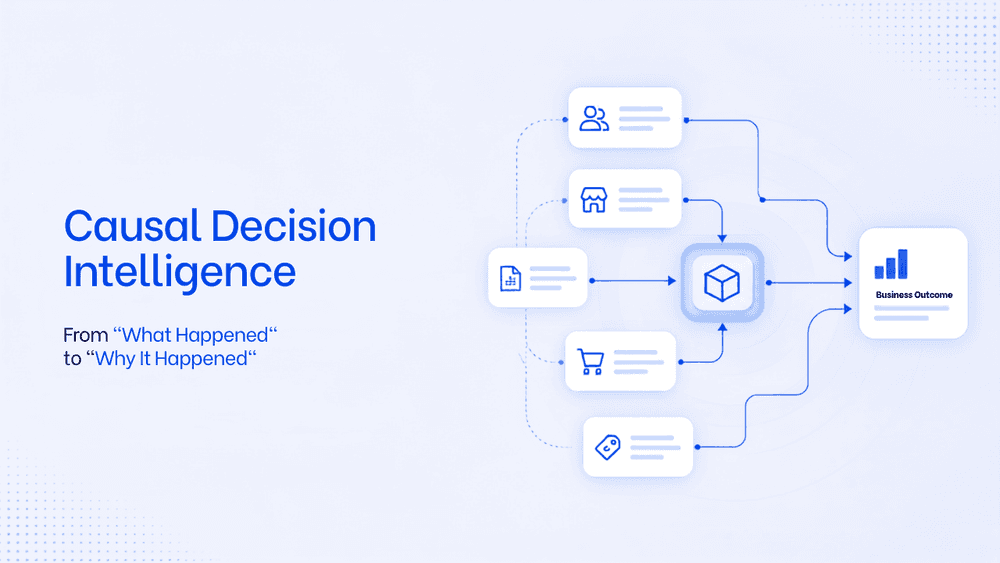
What Is Causal Decision Intelligence? A Framework To Move From "What Happened" to "Why It Happened"
Business intelligence tools are limited in their capability to find the root cause and the trigger behind it. Causal decision intelligence is the AI layer that helps business take faster, smarter decision with an auditable explanation. This will transform the way business analyse data and strategise on teh next actionable steps.
What Is a Data Silo and Why Is It Slowing Down Your Business?
Data silos are silently costing Indian businesses time, money and decisions. Here is what they are, why they form and how to break them for good with FireAI.

How a Modern Analytics Platform Transforms Business Intelligence
Why faster decision-making, real-time analytics, and AI-driven intelligence separate market leaders from laggards—and how Fire AI closes the gap between data and action.