
Quick answer
Business intelligence (BI) transforms raw data into actionable insights through dashboards, reports, and visualisations. Modern BI platforms let any business user — not just analysts — ask questions in plain language, track KPIs in real time, and make data-driven decisions without writing SQL or code.
Business intelligence (BI) transforms raw business data into actionable insights through systematic collection, analysis, and visualization. BI systems enable organizations to convert data assets into strategic advantages by providing comprehensive views of operational performance, customer behavior, and market dynamics.
Modern BI platforms combine data visualization, self-service BI capabilities, and predictive analytics to make enterprise-grade intelligence accessible to all businesses, not just data analysts.
What is Business Intelligence?
Business intelligence encompasses the technologies, processes, and practices that convert raw business data into meaningful insights. The core function involves extracting data from operational systems, applying analytical techniques, and presenting results through interactive interfaces that support informed decision-making.
BI systems operate through structured workflows that include data extraction from multiple sources, transformation into consistent formats, loading into analytical databases, and presentation through user-friendly dashboards and reports.
Core Components
Data Integration Layer: BI platforms connect to diverse data sources including relational databases, cloud services, and operational systems. This layer handles data extraction, transformation, and loading processes that ensure data consistency across the organization.
Analytical Engine: The processing layer applies statistical methods, trend analysis, and performance metrics to raw data. This includes aggregations, calculations, and comparative analyses that reveal business patterns and anomalies.
Visualization Framework: User interfaces provide interactive dashboards, charts, and reports that make complex data relationships accessible to business users without requiring technical expertise.
How Business Intelligence Works
Data Collection Phase
Systems ingest data from operational databases, transaction systems, and external sources. This includes structured data from relational databases and semi-structured data from applications and APIs.
Data Processing Pipeline
Raw data undergoes cleaning, normalization, and transformation processes. Business rules and calculations are applied to create derived metrics and key performance indicators that align with organizational objectives.
Analytical Capabilities
BI systems provide multiple analytical approaches:
- Descriptive analytics for understanding current performance
- Diagnostic analytics for identifying root causes
- Predictive analytics for forecasting trends
- Prescriptive analytics for recommending actions
Delivery Mechanisms
Results are delivered through:
- Scheduled reports for regular monitoring
- Interactive dashboards for exploratory analysis
- Alert systems for threshold breaches
- Mobile interfaces for remote access
Business Intelligence vs Analytics
| Aspect | Business Intelligence | Business Analytics |
|---|---|---|
| Focus | Historical and current data | Future predictions and optimization |
| Scope | Operational reporting and monitoring | Strategic planning and forecasting |
| Users | Operational managers and executives | Data scientists and analysts |
| Tools | Dashboards, reports, KPIs | Statistical models, machine learning |
| Time Horizon | Past and present performance | Future scenarios and outcomes |
Key Benefits of Business Intelligence
Operational Efficiency
BI systems provide real-time visibility into business processes, enabling rapid identification and resolution of operational issues. Automated monitoring reduces manual reporting efforts and ensures consistent performance tracking.
Strategic Decision Making
Comprehensive data views enable executives to understand market dynamics, customer behavior, and competitive positioning. This supports informed strategic planning and resource allocation decisions.
Cost Optimization
Performance analytics identify inefficiencies and cost drivers across operations. Organizations can target improvement initiatives based on data-driven insights rather than intuition.
Risk Management
Early warning systems and trend analysis help organizations anticipate market changes and operational risks. Proactive monitoring prevents issues from escalating into major problems.
Modern BI Capabilities
Self-Service Analytics
Modern BI platforms enable self-service BI capabilities that let business users create their own analyses without IT assistance. Drag-and-drop interfaces and natural language queries democratize data access across organizations.
Real-Time Processing
Streaming data capabilities enable immediate response to business events. Real-time dashboards provide current operational status and trigger automated responses to critical conditions.
Advanced Visualizations
Interactive charts, geospatial mapping, and custom visualizations make complex data relationships understandable. Users can drill down into details and explore data hierarchies.
Mobile BI
Responsive interfaces and mobile applications ensure data access across devices. Field personnel and remote workers maintain access to critical business information.
Implementation Considerations
Data Governance
Effective BI requires robust data governance frameworks that ensure data quality, security, and compliance. Organizations must establish data stewardship roles and quality monitoring processes.
User Adoption
Successful BI implementations require comprehensive training programs and change management initiatives. User-friendly interfaces and self-service capabilities accelerate adoption across organizational levels.
Scalability Architecture
BI systems must handle growing data volumes and user loads. Cloud-based architectures provide elastic scaling capabilities that accommodate organizational growth.
Integration Strategy
BI platforms must integrate with existing systems and workflows. API-based connections and standardized data formats ensure seamless data flow across the organization.
BI Technology Evolution
Traditional BI
Legacy systems focused on structured reporting and predefined dashboards. These systems required significant IT involvement and had limited user flexibility.
Self-Service BI
Modern platforms emphasize user empowerment through intuitive interfaces. Business users can create analyses independently, reducing IT bottlenecks.
AI-Augmented BI
Current generation systems incorporate machine learning for automated insights and natural language processing for conversational interfaces. These systems provide proactive recommendations and pattern discovery.
Cloud-Native BI
Contemporary BI platforms leverage cloud infrastructure for scalability, collaboration, and real-time processing. These systems support distributed teams and global operations.
Choosing Business Intelligence Solutions
Functional Requirements
Organizations should evaluate BI platforms based on data source connectivity, analytical capabilities, and visualization options. Consider integration requirements and scalability needs.
User Experience
Interface design and ease of use significantly impact adoption rates. Platforms with intuitive workflows and comprehensive training resources perform better in enterprise environments.
Total Cost of Ownership
Consider licensing costs, implementation expenses, and ongoing maintenance requirements. Cloud-based solutions often provide better cost predictability through subscription models.
Vendor Support
Evaluate vendor stability, support quality, and product roadmap alignment. Organizations should assess vendor commitment to innovation and customer success.
Why Indian Businesses Are Adopting BI Faster Than Ever
India has 63 million MSMEs, yet fewer than 5% use any form of structured analytics. The gap is closing fast as affordable, India-ready BI platforms make enterprise-grade intelligence accessible:
- Tally-centric data: Most Indian SMEs run on Tally. BI tools with native Tally integration eliminate the manual Excel export cycle.
- GST compliance analytics: GSTR-1 reconciliation, HSN-wise tax summaries, and ITC tracking become automated dashboards instead of monthly spreadsheet exercises.
- Lakhs/crores formatting: Indian number formats, ₹ symbol, and April–March financial years need to work out of the box — not through DAX hacks.
- Regional language access: A warehouse manager in Jaipur or a sales head in Coimbatore should be able to query data in Hindi or Tamil.
Example: A ₹40Cr textile distributor in Surat replaced 3 days of monthly MIS preparation with real-time dashboards. Their sales team now tracks dealer-wise performance daily, catching ₹12L in overdue receivables within the first month.
FireAI: BI Built for Indian Businesses
FireAI delivers enterprise-grade BI at ₹4,999/month — a fraction of what Power BI or Tableau costs after connectors, training, and customisation.
Zero-Code, Instant Setup
- 250+ native connectors including Tally, Zoho, Shopify, MySQL, PostgreSQL, Google Sheets, and REST APIs
- No SQL, no code: Drag-and-drop dashboards and natural language queries in Hindi and English
- 5-minute Tally connection: Native integration understands ledgers, voucher types, cost centres — not just flat tables
India-First Design
- Lakhs/crores formatting with ₹ symbol — native, not custom formulas
- April–March financial year with Indian quarterly definitions (Q1 = Apr–Jun)
- Built-in GST dashboards: GSTR-1 reconciliation, ITC tracking, HSN-wise summaries from Tally data
- Hindi + regional language NLQ: Ask "पिछले महीने की बिक्री दिखाओ" and get an instant chart
AI-Powered Intelligence
- Conversational analytics: Ask questions in plain language — "Which dealer had the highest returns this quarter?" — and get immediate answers
- Causal chain analysis: Visual root-cause discovery that maps how KPIs influence each other — a capability Power BI and Tableau lack entirely
- Predictive forecasting: AI-driven trend analysis and anomaly detection
- Proactive alerts: Get notified when a metric breaches a threshold — before it becomes a problem
Enterprise Security, SMB Pricing
- AES-256 encryption, role-based access, audit trails
- 99.9% uptime SLA with disaster recovery
- Mobile-first design with offline dashboard access
- Voice-enabled queries via Bhashini integration
Bottom line: Indian businesses shouldn't pay ₹50,000+/month and hire a BI team to get insights from their own data. FireAI makes business intelligence accessible to the founder, the CA, and the sales manager — not just the data analyst.
Ready to act on your data?
See how teams use FireAI to ask in plain language and get analytics they can trust.
Explore FireAI workflows
Go from this topic into product features and solution paths that match what you read here.
Topic hub
Dashboard And Reporting
Practical content on KPI dashboards, executive reporting, trend analysis, charts, and reporting automation.
Explore hubFrequently asked questions
Related in this topic
What is Self-Service BI? Benefits and Tools
Self-service BI empowers business users to analyze data independently without IT assistance. Learn how self-service BI works, which tools enable it, and how to implement it to democratize data access and accelerate decision-making.
Natural Language BI: Ask Questions, Get Charts
Discover how natural language BI lets anyone ask data questions in plain English and get instant charts and answers. No SQL, no dashboard building required.
What is a Business Dashboard? Types and Examples
A business dashboard is a visual interface that displays KPIs, metrics, and data insights in real-time. Learn how business dashboards work, which types exist, and how to design effective dashboards for executives, managers, and teams.
What is No-Code Analytics? Definition, Tools, and Benefits
No-code analytics lets business users analyse data, build dashboards, and generate insights without writing SQL or code. Learn what no-code analytics tools are, how they work, and which platforms offer no-code BI for Indian businesses.
From the blog

How a Modern Analytics Platform Transforms Business Intelligence
Why faster decision-making, real-time analytics, and AI-driven intelligence separate market leaders from laggards—and how Fire AI closes the gap between data and action.
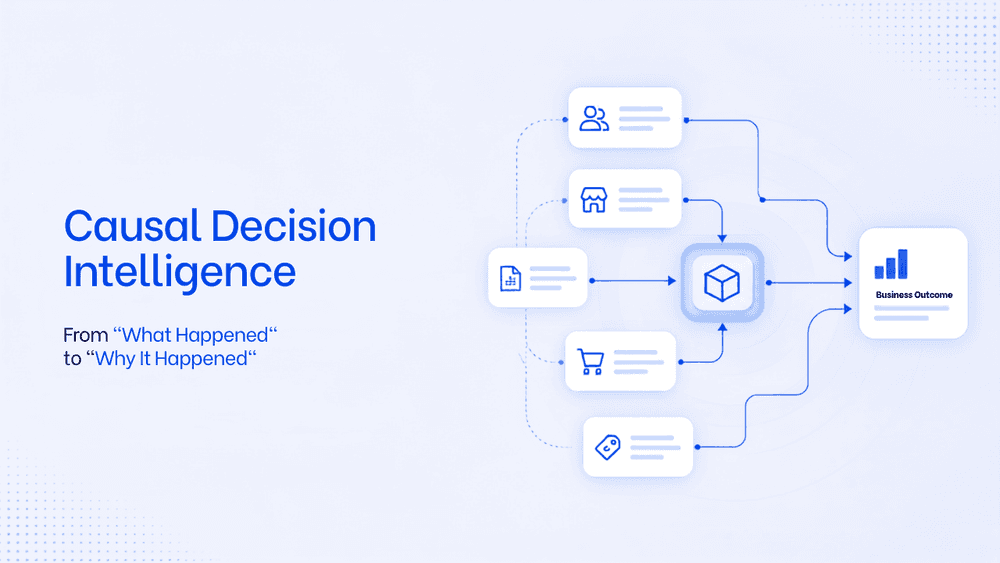
What Is Causal Decision Intelligence? A Framework To Move From "What Happened" to "Why It Happened"
Business intelligence tools are limited in their capability to find the root cause and the trigger behind it. Causal decision intelligence is the AI layer that helps business take faster, smarter decision with an auditable explanation. This will transform the way business analyse data and strategise on teh next actionable steps.
What Is a Data Silo and Why Is It Slowing Down Your Business?
Data silos are silently costing Indian businesses time, money and decisions. Here is what they are, why they form and how to break them for good with FireAI.