
Quick answer
Descriptive analytics summarises historical data to answer "what happened?" It uses aggregation, KPI tracking, and dashboards to show business performance—like total revenue, monthly sales trends, or regional breakdowns. It's the foundation of business intelligence and the starting point before diagnostic, predictive, or prescriptive analytics. FireAI automates descriptive reporting through pre-built dashboards and NLQ.
Descriptive analytics summarizes and interprets historical data to answer "what happened?" Using statistical methods and data aggregation, it provides insights into business performance, identifies patterns, and creates the foundation for more advanced analytics approaches.
Descriptive analytics forms the foundation of business intelligence, providing essential insights into historical performance and current conditions. By summarizing and interpreting past data, organizations gain understanding of their operations, enabling informed decision-making and establishing baselines for diagnostic analytics, predictive analytics, and prescriptive analytics.
What is Descriptive Analytics?
Descriptive analytics uses statistical methods, data aggregation, and visualization techniques to summarize and interpret historical data, answering the fundamental question of "What happened?" This foundational level of analytics transforms raw data into understandable insights, providing organizations with a clear view of past performance, current conditions, and basic trends.
The approach focuses on organizing and presenting data in meaningful ways, using dashboards, reports, and visualizations to make complex information accessible to business users. Descriptive analytics serves as the entry point for most organizations' analytical journeys, establishing the groundwork for diagnostic, predictive, and prescriptive analytics.
Core Characteristics
Historical Focus: Analyzes past and current data to understand what has occurred.
Data Summarization: Aggregates and condenses large volumes of data into digestible formats.
Pattern Identification: Recognizes basic patterns and trends in historical data.
Performance Monitoring: Tracks key metrics and KPIs over time.
Foundation Building: Creates the baseline for more advanced analytical approaches.
How Descriptive Analytics Works
Data Collection and Integration
Descriptive analytics begins with comprehensive data gathering:
- Operational data from business systems
- Transaction records and customer interactions
- Financial data and performance metrics
- External market and economic data
- Time-series data for trend analysis
Data Processing and Aggregation
Raw data undergoes processing to enable analysis:
- Data cleaning and standardization
- Aggregation by time periods, categories, and dimensions
- Calculation of key performance indicators
- Statistical summarization and basic calculations
- Data quality validation and consistency checks
Statistical Analysis
Basic statistical methods provide insights:
- Measures of central tendency (mean, median, mode)
- Measures of dispersion (variance, standard deviation, range)
- Frequency distributions and histograms
- Basic correlation analysis
- Trend identification and basic forecasting
Visualization and Reporting
Results are presented through accessible formats:
- Interactive dashboards with real-time updates
- Scheduled reports for regular monitoring
- Charts, graphs, and data visualizations
- Scorecards and KPI tracking
- Executive summaries and performance overviews
Insight Generation
Descriptive analytics provides actionable understanding:
- Performance comparisons across time periods
- Identification of high and low performers
- Basic trend analysis and pattern recognition
- Exception reporting and threshold alerts
- Benchmarking against goals and standards
Descriptive Analytics vs Other Analytics Types
Descriptive Analytics
Descriptive analytics answers "What happened?":
- Summarizes historical and current data
- Provides dashboards, reports, and basic visualizations
- Focuses on understanding past performance
- Enables monitoring and awareness
- Foundation for all other analytics types
Diagnostic Analytics
Diagnostic analytics answers "Why did it happen?":
- Identifies root causes and relationships
- Performs drill-down and correlation analysis
- Explains factors contributing to outcomes
- Enables problem-solving and improvement
- Supports understanding of causal relationships
Predictive Analytics
Predictive analytics answers "What is likely to happen?":
- Forecasts future outcomes based on historical patterns
- Uses statistical modeling and machine learning
- Provides probability estimates and confidence intervals
- Enables risk assessment and planning
- Supports proactive decision-making
Prescriptive Analytics
Prescriptive analytics answers "What should we do?":
- Recommends optimal actions and decisions
- Uses optimization and simulation techniques
- Provides specific, actionable recommendations
- Enables automated decision execution
- Supports strategic optimization and automation
| Analytics Type | Focus | Key Question | Methodology | Time Orientation | Business Value |
|---|---|---|---|---|---|
| Descriptive | What happened | What are our sales? | Reporting, dashboards | Past/Present | Awareness & monitoring |
| Diagnostic | Why it happened | Why did sales drop? | Root cause analysis | Past | Problem identification |
| Predictive | What will happen | What will sales be? | Forecasting, ML | Future | Risk management |
| Prescriptive | What should we do | How to increase sales? | Optimization, AI | Future | Decision automation |
Key Components
Data Warehouses and Storage
Descriptive analytics relies on structured data storage:
- Data warehouses for integrated business data
- Data marts for department-specific analysis
- OLAP cubes for multi-dimensional analysis
- Historical data archives for trend analysis
- Real-time data integration for current views
Business Intelligence Tools
User-friendly platforms enable descriptive analysis:
- Dashboard creation and customization
- Drag-and-drop report building
- Self-service analytics capabilities
- Scheduled report distribution
- Mobile access and responsive design
Key Performance Indicators (KPIs)
Descriptive analytics tracks critical metrics:
- Financial KPIs (revenue, profit margins, ROI)
- Operational KPIs (efficiency, quality, throughput)
- Customer KPIs (satisfaction, retention, lifetime value)
- Marketing KPIs (conversion rates, campaign performance)
- Human resources KPIs (productivity, turnover, engagement)
Reporting Frameworks
Structured approaches to information delivery:
- Executive dashboards for high-level overviews
- Operational reports for day-to-day monitoring
- Ad-hoc reports for specific analysis needs
- Regulatory and compliance reports
- Automated alert systems for exceptions
Data Visualization
Effective presentation of insights:
- Charts and graphs for trend visualization
- Tables and matrices for detailed comparisons
- Maps and geospatial visualizations
- Gauges and meters for KPI tracking
- Interactive elements for exploration
Applications Across Industries
Retail and E-commerce
Descriptive analytics tracks retail performance:
- Sales performance by product, category, and location
- Customer purchase patterns and preferences
- Inventory turnover and stock level analysis
- Seasonal trend identification and analysis
- Marketing campaign effectiveness measurement
Financial Services
Financial institutions monitor key metrics:
- Portfolio performance and risk metrics
- Transaction volumes and processing efficiency
- Customer account activity and balances
- Regulatory compliance and reporting
- Market position and competitive analysis
Manufacturing
Manufacturing operations track production metrics:
- Production volume and efficiency analysis
- Quality control and defect rate monitoring
- Equipment utilization and downtime tracking
- Supply chain performance and lead times
- Cost analysis by product and process
Healthcare
Healthcare organizations monitor patient and operational metrics:
- Patient outcomes and treatment effectiveness
- Resource utilization and capacity analysis
- Quality metrics and patient satisfaction scores
- Operational efficiency and wait time analysis
- Financial performance and cost management
Marketing and Sales
Marketing teams analyze campaign and sales performance:
- Campaign reach, engagement, and conversion rates
- Sales pipeline analysis and conversion tracking
- Customer acquisition and retention metrics
- Channel performance and ROI analysis
- Market segmentation and targeting effectiveness
Implementation Considerations
Data Infrastructure
Building the foundation for descriptive analytics:
- Data warehouse or data lake implementation
- ETL/ELT processes for data integration
- Data quality and governance frameworks
- Scalable storage and processing capabilities
- Real-time data integration where needed
Tool Selection
Choosing appropriate platforms and tools:
- User-friendly BI platforms for business users
- Scalable infrastructure for growing data volumes
- Integration capabilities with existing systems
- Mobile and cloud access options
- Cost-effective licensing models
User Training and Adoption
Ensuring organizational adoption:
- Training programs for different user skill levels
- Change management and cultural transformation
- Governance frameworks for data access and usage
- Support structures for ongoing assistance
- Success metrics and adoption tracking
Performance Optimization
Ensuring responsive and reliable systems:
- Query optimization and performance tuning
- Caching strategies for frequently accessed data
- Scalable architecture for concurrent users
- Monitoring and alerting for system health
- Regular maintenance and optimization
Security and Compliance
Protecting sensitive data and ensuring compliance:
- Role-based access controls and data security
- Audit trails and usage monitoring
- Compliance with data privacy regulations
- Data masking and anonymization techniques
- Secure sharing and collaboration features
Benefits of Descriptive Analytics
Improved Visibility
Descriptive analytics provides comprehensive visibility into business operations:
- Real-time dashboards show current performance
- Historical trends reveal patterns and cycles
- Comparative analysis highlights strengths and weaknesses
- Exception reporting identifies areas needing attention
- Benchmarking establishes performance standards
Informed Decision-Making
Better data drives better decisions:
- Evidence-based decisions replace intuition
- Performance monitoring enables timely interventions
- Trend analysis supports strategic planning
- Comparative insights identify best practices
- Historical context informs future planning
Operational Efficiency
Streamlined operations through better monitoring:
- Early identification of performance issues
- Proactive management of operational metrics
- Optimized resource allocation based on data
- Reduced time spent on manual reporting
- Automated alert systems for immediate response
Organizational Alignment
Descriptive analytics aligns teams around data:
- Shared understanding of performance metrics
- Consistent reporting across departments
- Transparency in goal tracking and achievement
- Data-driven culture development
- Improved communication through shared insights
Foundation for Advanced Analytics
Descriptive analytics enables progression to higher maturity:
- Establishes data quality and governance foundations
- Builds analytical skills and capabilities
- Creates demand for more sophisticated analysis
- Provides baseline for predictive modeling
- Enables measurement of advanced analytics impact
Best Practices
Start with Business Objectives
Align analytics with business needs:
- Identify key business questions requiring answers
- Define critical success metrics and KPIs
- Prioritize high-impact metrics and dashboards
- Ensure executive sponsorship and alignment
- Plan for phased implementation and expansion
Focus on Data Quality
Ensure reliable and accurate insights:
- Implement comprehensive data validation processes
- Establish data governance and stewardship
- Create data quality monitoring and alerting
- Maintain consistent data definitions and standards
- Regular data cleansing and reconciliation
Design User-Centric Interfaces
Create intuitive and valuable experiences:
- Understand user needs and analytical maturity
- Design dashboards for specific roles and tasks
- Provide self-service capabilities for exploration
- Ensure mobile accessibility and responsiveness
- Include interactive elements for deeper analysis
Establish Reporting Rhythms
Create regular cadences for information delivery:
- Daily operational dashboards for immediate monitoring
- Weekly performance reports for tactical decisions
- Monthly executive summaries for strategic planning
- Quarterly business reviews for comprehensive analysis
- Ad-hoc reporting capabilities for specific needs
Monitor Adoption and Value
Track usage and business impact:
- Monitor dashboard usage and engagement metrics
- Measure time savings from automated reporting
- Track decision quality improvements
- Assess ROI through business outcome measurement
- Gather user feedback for continuous improvement
The Future of Descriptive Analytics
Enhanced Automation
Descriptive analytics will become more automated:
- AI-powered dashboard creation and optimization
- Automated insight generation and highlighting
- Smart alert systems with contextual recommendations
- Natural language query capabilities
- Predictive elements in descriptive reporting
Real-Time Capabilities
Real-time descriptive analytics will become standard:
- Streaming data integration for current views
- Real-time dashboard updates and alerts
- Live operational monitoring and control
- Instant performance visibility
- Continuous data quality monitoring
Advanced Visualization
Visualization capabilities will advance significantly:
- Augmented reality and immersive experiences
- AI-powered visualization recommendations
- Interactive and exploratory interfaces
- Collaborative visualization environments
- Mobile-optimized and voice-enabled interfaces
Integrated Analytics
Descriptive analytics will integrate with advanced approaches:
- Seamless progression to diagnostic analysis
- Embedded predictive insights in dashboards
- Prescriptive recommendations within reports
- Cross-system analytics integration
- Unified analytical experiences
Descriptive analytics remains the cornerstone of business intelligence, providing the essential foundation that enables organizations to understand their past performance and current state. As the most accessible form of analytics, it serves as the entry point for most organizations' analytical journeys, establishing the data literacy and infrastructure needed for more advanced analytical capabilities.
How FireAI Uses Descriptive Analytics
FireAI makes descriptive analytics effortless for Indian businesses—no SQL, no manual report-building:
Pre-Built Dashboards: Connect your Tally, MySQL, or Google Sheets data and get ready-made sales, finance, and operations dashboards within minutes. A Jaipur garment exporter can see monthly revenue by buyer, product mix by season, and outstanding receivables—all auto-generated.
Natural Language Queries for Reporting: Instead of waiting for your accountant to pull numbers, ask FireAI: "What were my top 10 products by revenue last quarter?" or "Show me monthly sales trend for the last 2 years." Instant descriptive analytics, zero technical skills needed.
Tally Integration for Indian SMBs: Most Indian SMBs already have years of transaction data in Tally. FireAI connects directly to Tally and turns that data into interactive dashboards—a ₹5 Cr revenue business in Ludhiana can finally see its performance visually without exporting to Excel.
Practical Indian Business Examples:
- A Nagpur FMCG wholesaler tracks daily sales across 300+ SKUs with auto-generated dashboards, replacing 4 hours of daily Excel work
- A Coimbatore textile mill monitors production efficiency, defect rates, and order fulfilment KPIs in real-time—catching issues that previously cost ₹6 lakh/month in delays
- A Kolkata restaurant chain uses descriptive dashboards to compare revenue across 12 outlets, identifying that one location underperforms by ₹3.5 lakh/month due to menu mix
The Foundation That Makes Everything Else Work: Descriptive analytics isn't glamorous, but it's essential. You can't diagnose why sales dropped, predict next quarter's revenue, or prescribe actions without first knowing what actually happened. FireAI ensures that foundation is always accurate, always current, and always accessible.
Ready to act on your data?
See how teams use FireAI to ask in plain language and get analytics they can trust.
Explore FireAI workflows
Go from this topic into product features and solution paths that match what you read here.
Topic hub
Dashboard And Reporting
Practical content on KPI dashboards, executive reporting, trend analysis, charts, and reporting automation.
Explore hubFrequently asked questions
Related in this topic
What Is Diagnostic Analytics? Definition, Examples & Techniques
Diagnostic analytics answers WHY something happened — not just what. Learn the definition, 5 key techniques (root cause analysis, drill-down, correlation), and real business examples.
What is Predictive Analytics? Methods and Examples
Predictive analytics uses statistical algorithms and machine learning to forecast future outcomes based on historical data. Learn how predictive modeling works, which methods are used, and how businesses apply it for sales forecasting, risk management, and strategic planning.
What is Prescriptive Analytics? Examples and Benefits
Prescriptive analytics uses AI and optimization algorithms to recommend specific actions for optimal results. Learn how prescriptive analytics works, which techniques it uses, and how businesses apply it for decision automation and optimization.
What is Business Intelligence? Definition and Benefits
Business intelligence (BI) combines data analysis, visualization, and reporting to transform raw data into actionable insights. Learn how BI systems work, which tools to use, and how they enable data-driven decision-making.
From the blog
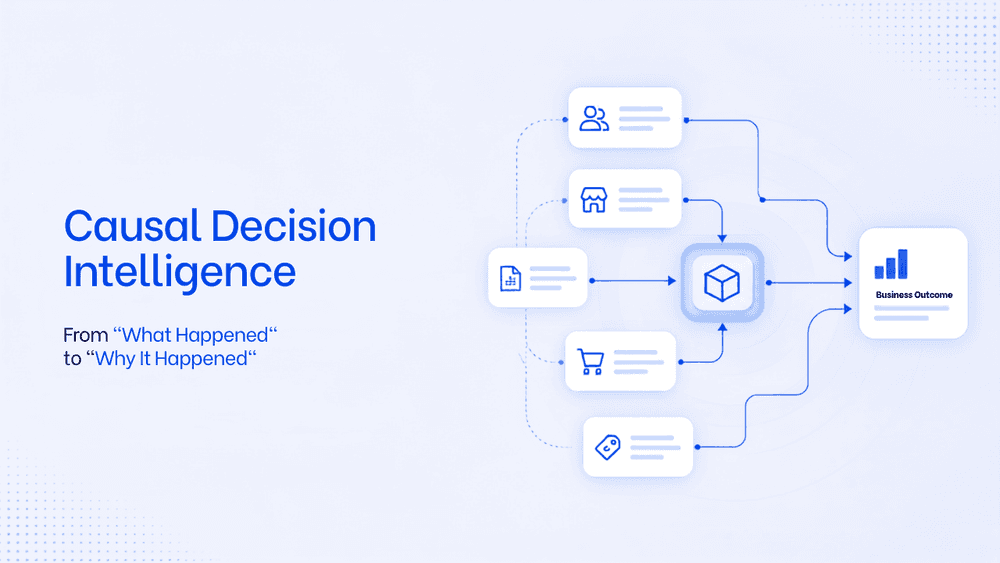
What Is Causal Decision Intelligence? A Framework To Move From "What Happened" to "Why It Happened"
Business intelligence tools are limited in their capability to find the root cause and the trigger behind it. Causal decision intelligence is the AI layer that helps business take faster, smarter decision with an auditable explanation. This will transform the way business analyse data and strategise on teh next actionable steps.
What Is a Data Silo and Why Is It Slowing Down Your Business?
Data silos are silently costing Indian businesses time, money and decisions. Here is what they are, why they form and how to break them for good with FireAI.

How a Modern Analytics Platform Transforms Business Intelligence
Why faster decision-making, real-time analytics, and AI-driven intelligence separate market leaders from laggards—and how Fire AI closes the gap between data and action.