
Quick answer
The best BI tools for pharmaceutical analytics in India include FireAI, Power BI, Tableau, and specialized healthcare BI platforms. The right choice depends on your supply chain complexity, regulatory reporting needs, inventory planning requirements, and whether you need predictive analytics for demand forecasting.
The best BI tools for pharmaceutical analytics in India include FireAI, Power BI, Tableau, and specialized healthcare BI platforms. The right choice depends on your supply chain complexity, regulatory reporting needs, inventory planning requirements, and whether you need predictive analytics for demand forecasting.
The pharmaceutical industry in India faces unique challenges with complex supply chains, stringent regulatory requirements, and the need for real-time inventory management. Traditional business intelligence tools create bottlenecks with slow report generation and limited predictive capabilities. Modern BI platforms address these challenges through AI-powered analytics designed for healthcare operations. For broader BI comparisons, see best BI tools in India.
Why Pharmaceutical Companies Need Advanced BI Tools
The pharmaceutical industry in India faces unique challenges with complex supply chains, stringent regulatory requirements, and the need for real-time inventory management. Traditional BI tools create bottlenecks with slow report generation and limited predictive capabilities. FireAI addresses these challenges through AI-powered analytics designed for healthcare operations.
Key Challenges in Pharmaceutical Analytics
Slow Report Generation: Traditional workflows require nearly a week to produce consolidated reports for inventory planning and supply chain decisions.
Reactive Inventory Management: By the time insights reach supply chain leaders, demand patterns have already shifted, leading to stock imbalances and delivery delays.
Limited Predictive Capabilities: Most pharma BI tools focus on historical reporting rather than predictive analytics for demand forecasting.
Technical Barriers: Healthcare professionals need instant access to data without learning complex BI interfaces or SQL queries.
FireAI Impact on Pharmaceutical Operations
Real-Time Inventory Intelligence
FireAI transforms pharmaceutical inventory management by providing instant access to critical metrics:
- Live Order Flow Monitoring: Dynamic dashboards reveal real-time order patterns and inventory movements
- Predictive Stock Analysis: AI algorithms identify demand trends before they impact supply chain operations
- Stock Imbalance Detection: Automated alerts for overstock and stockout scenarios with recommended actions
Accelerated Report Generation
Traditional pharmaceutical BI tools require extensive manual processes. FireAI eliminates these bottlenecks:
- Minutes Instead of Weeks: Generate comprehensive inventory and supply chain reports in minutes
- Natural Language Queries: Ask questions like "Show me current stock levels for antibiotics" or "What are my top-moving drugs this month?"
- Automated Consolidation: AI automatically combines data from multiple sources for unified reporting
Advanced Analytics for Healthcare
Causal Chain Analysis: Identify root causes of inventory volatility and demand fluctuations by visualizing relationships between:
- Seasonal demand patterns and inventory levels
- Supplier performance and stock availability
- Regulatory changes and procurement cycles
- Market competition and pricing strategies
Anomaly Detection: Proactively identify unusual demand movements and supply disruptions:
- Sudden spikes in drug orders indicating potential outbreaks
- Supplier delays affecting inventory pipelines
- Quality control issues impacting batch availability
- Regulatory compliance variations across regions
Pharmaceutical Analytics Software India: Technical Capabilities
Multi-Source Data Integration
FireAI connects seamlessly with pharmaceutical data systems:
- ERP Integration: Native support for pharmaceutical ERP systems including SAP, Oracle, and custom healthcare platforms
- Regulatory Databases: Integration with CDSCO, FDA, and other compliance databases for real-time regulatory analytics
- Supply Chain Systems: Connect with distributors, wholesalers, and logistics providers for end-to-end visibility
- Quality Control Systems: Link with laboratory information management systems (LIMS) for batch quality analytics
Voice-Enabled Healthcare Analytics
Healthcare professionals can use voice queries in regional languages:
- Ask questions hands-free during production line monitoring
- Get instant answers while conducting quality inspections
- Access critical metrics during emergency situations
- Support for Hindi, English, and other Indian languages
Mobile-First Pharmaceutical BI
Decision-makers can access critical insights anywhere:
- Monitor inventory levels during off-site meetings
- Review supply chain performance from manufacturing facilities
- Access compliance reports during regulatory inspections
- Receive real-time alerts on mobile devices
Drug Manufacturing Analytics India: Industry-Specific Features
Batch Tracking and Quality Analytics
- Batch Performance Analysis: Track manufacturing yields, quality metrics, and cost variations across production batches
- Quality Control Integration: Connect with QC systems to correlate quality parameters with production efficiency
- Regulatory Compliance Monitoring: Automated tracking of compliance metrics and audit trail generation
Supply Chain Optimization
- Demand Forecasting: AI-powered prediction of drug demand based on historical data, seasonal patterns, and market trends
- Supplier Performance Analytics: Evaluate supplier reliability, delivery times, and quality consistency
- Inventory Turnover Analysis: Optimize stock levels while maintaining regulatory requirements for drug availability
Cost and Margin Analysis
- Manufacturing Cost Tracking: Monitor production costs across different drug categories and formulations
- Profitability Analysis: Identify most profitable drugs and optimize production planning accordingly
- Waste Reduction: Minimize expired drug waste through predictive expiration tracking
Healthcare BI Tools India: Implementation for Pharma Companies
Quick Deployment Process
- Data Source Connection: Connect existing ERP, quality control, and supply chain systems
- Schema Mapping: AI automatically understands pharmaceutical data structures and relationships
- Query Training: Healthcare teams start asking business questions immediately
- Dashboard Creation: Build customized dashboards for different user roles (production, quality, supply chain, regulatory)
User Adoption Strategy
- Role-Based Training: Different training modules for manufacturing operators, quality managers, supply chain leaders, and executives
- Gradual Implementation: Start with high-impact use cases like inventory monitoring and scale to advanced analytics
- Change Management: Demonstrate quick wins to build confidence and drive adoption across the organization
Outcomes and ROI for Pharmaceutical Companies
Operational Improvements
- Reduced Stockouts: Predictive analytics ensure critical drugs remain available
- Optimized Inventory: Right inventory levels reduce carrying costs and minimize waste
- Faster Decision Making: Instant access to data enables rapid response to market changes
- Improved Compliance: Automated reporting and audit trails simplify regulatory compliance
Financial Benefits
- Cost Reduction: Lower inventory carrying costs and reduced waste from expired drugs
- Revenue Optimization: Better demand forecasting improves sales planning and market responsiveness
- Operational Efficiency: Faster report generation reduces administrative overhead
- Quality Improvement: Proactive quality monitoring reduces batch failures and recalls
Best Practices for Pharmaceutical BI Implementation
Data Governance
- Regulatory Compliance: Ensure all analytics comply with healthcare data privacy regulations
- Data Quality: Implement validation processes for pharmaceutical data accuracy
- Audit Trails: Maintain complete audit trails for all analytical processes
Change Management
- Stakeholder Engagement: Involve all user groups in the selection and implementation process
- Training Programs: Develop comprehensive training for different user roles and expertise levels
- Support Structure: Establish internal champions and support teams for ongoing adoption
Technology Integration
- API-First Approach: Ensure BI tools integrate seamlessly with existing pharmaceutical systems
- Scalability Planning: Design for future growth in data volumes and user adoption
- Mobile Strategy: Prioritize mobile access for field operations and remote monitoring
FireAI represents the future of pharmaceutical analytics in India, combining AI-powered insights with healthcare-specific functionality to drive operational excellence and regulatory compliance.
Ready to act on your data?
See how teams use FireAI to ask in plain language and get analytics they can trust.
Explore FireAI workflows
Go from this topic into product features and solution paths that match what you read here.
Topic hub
Industry Analytics In India
Comparison pages and implementation guidance for industry-specific BI, dashboards, and analytics use cases in India.
Explore hubFrequently asked questions
Related in this topic
Best Retail Analytics Tools in India (2026)
Compare the best BI tools for retail analytics in India—pricing, features, POS integration, and inventory dashboards. See which platform fits Indian retailers from SMB to chain.
Best BI Tools for Logistics Companies in India (2026)
Compare the best BI and analytics platforms for Indian logistics and transport companies. See how tools stack up on fleet management, lane profitability, delivery SLA tracking, and Tally-friendly finance dashboards.
Best BI Tools for Food & Beverage in India (2026)
Compare the best BI and analytics platforms for Indian restaurants, QSRs, and F&B chains. See how tools stack up on menu engineering, food cost tracking, outlet benchmarking, and finance dashboards tied to POS and Tally.
Best BI Tools for Manufacturing Analytics in India (2026)
Compare the best business intelligence tools for Indian manufacturing companies. Track production efficiency, OEE, quality, cost, and supply chain metrics with FireAI, Power BI, Zoho Analytics, and other platforms.
From the blog

Democratizing Data: How AI Analytics Levels the Playing Field for Small Businesses and Freelancers
For decades, data-driven decision making was a luxury that only enterprises could afford. Big companies hired data scientists, purchased expensive BI tools, and built complex data warehouses. In exchange, they received precise insights that guided budgets, strategy, and growth.
Measuring Promotion Effectiveness: A Data-Driven Guide for FMCG Marketers
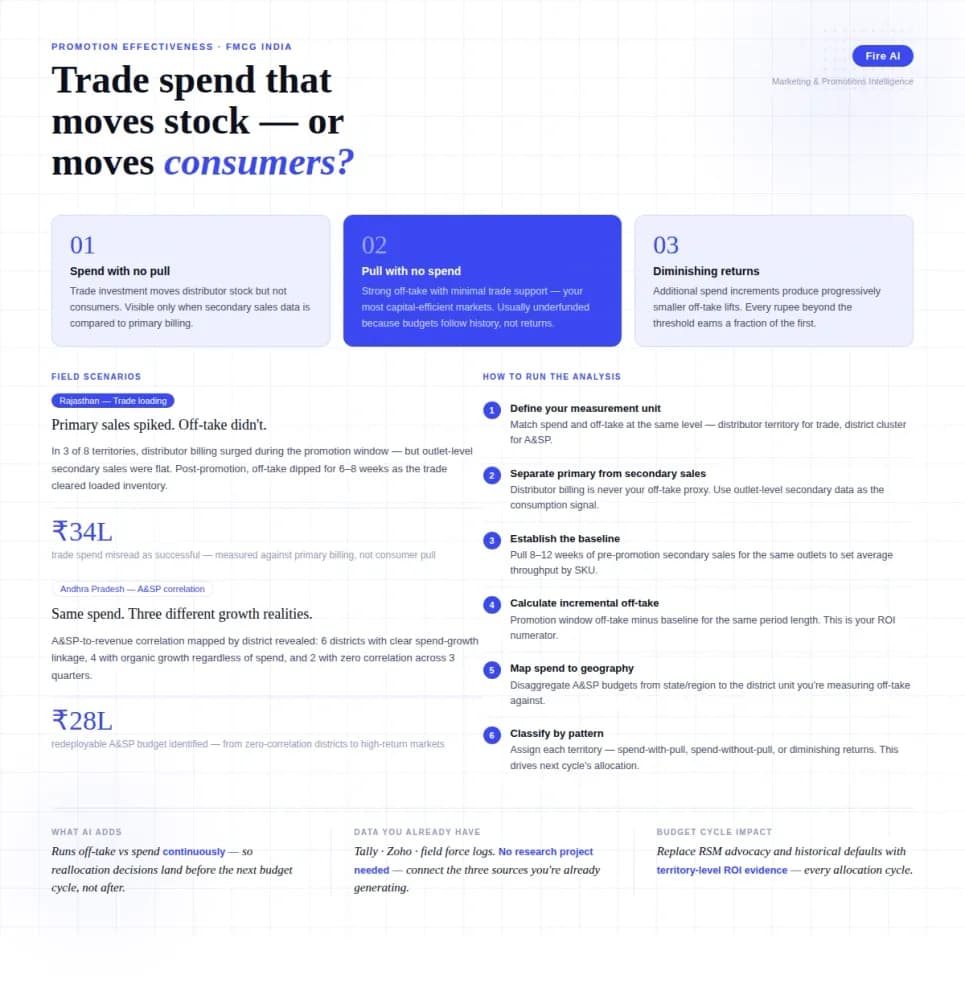
FMCG brands in India spend 15–25% of gross revenue on trade promotions and A&SP (advertising and sales promotion) every year. Most can tell you how much they spent. Very few can tell you what it returned. The problem isn't a lack of data — it's that the data lives in disconnected places. Trade spend sits in finance. Off-take data lives with the distributor or field team. A&SP budgets are tracked in a marketing spreadsheet. No single view ties promotional investment to consumer pull at the outlet level. The result is a budget cycle where last year's spend allocation becomes next year's default, because no one has the numbers to argue for something different. This guide walks through how FMCG marketing and trade teams can build a promotion effectiveness framework that actually connects spend to outcome — not just channel-level assumptions.
Why Tally + ERP + Excel Will Never Agree With Each Other
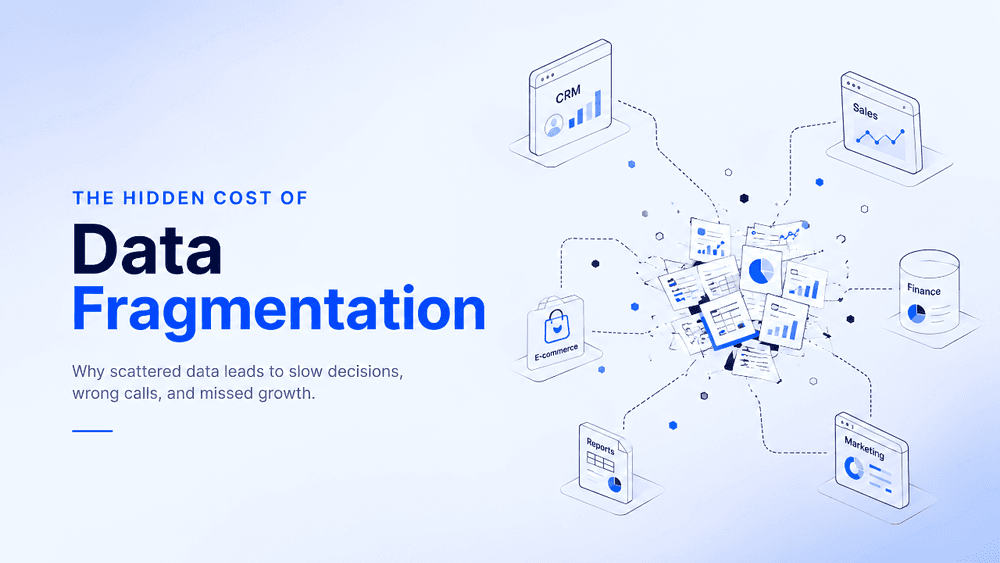
Learn why fragmented data across Tally, ERP and Excel creates conflicting numbers, and how a unified analytics layer restores one source of truth.