
Quick answer
AI-powered business intelligence integrates artificial intelligence and machine learning with traditional BI systems to automate data analysis, generate insights, and enable natural language interactions. AI BI platforms use algorithms to identify patterns, predict trends, and answer business questions conversationally, transforming how organizations access and understand their data.
AI-powered business intelligence integrates artificial intelligence and machine learning with traditional BI systems to automate data analysis, generate insights, and enable natural language interactions. AI BI platforms use algorithms to identify patterns, predict trends, and answer business questions conversationally, transforming how organizations access and understand their data.
AI-powered business intelligence represents the evolution of traditional business intelligence systems through the integration of artificial intelligence, machine learning, and natural language processing. These platforms transform how organizations interact with data by automating insight generation, enabling conversational queries, and providing predictive analytics capabilities that go beyond historical reporting. AI BI enables self-service BI by making advanced analytics accessible to non-technical users.
What is AI-Powered Business Intelligence?
AI-powered business intelligence combines artificial intelligence technologies with traditional business intelligence capabilities to create intelligent systems that can understand, analyze, and communicate business insights automatically. Unlike conventional BI tools that require users to build queries and dashboards manually, AI BI platforms can interpret natural language questions, discover patterns autonomously, and provide proactive recommendations.
The core innovation lies in applying machine learning algorithms to business data analysis, enabling systems to learn from historical patterns, identify anomalies, and predict future outcomes without explicit programming. This transforms BI from a reactive reporting tool into a proactive intelligence system that actively guides business decisions.
Core Components of AI BI
Natural Language Processing (NLP): AI BI platforms incorporate NLP to understand human language queries and convert them into data analysis operations. Users can ask questions like "What were our top-selling products last quarter?" in plain English, and the system automatically generates the appropriate queries and visualizations.
Machine Learning Analytics: Advanced algorithms analyze historical data patterns to identify trends, correlations, and anomalies. These systems continuously learn from new data, improving their accuracy and relevance over time without manual retraining.
Automated Insight Generation: AI systems scan data automatically to discover significant patterns, outliers, and relationships that might not be immediately obvious. They surface these insights proactively, alerting users to important findings without requiring specific queries.
Predictive and Prescriptive Analytics: Beyond describing what happened, AI BI platforms forecast future outcomes and recommend specific actions. Machine learning models predict trends, customer behavior, and operational outcomes, while prescriptive analytics suggests optimal strategies.
Conversational Interfaces: Chat-like interfaces enable users to interact with data through natural dialogue. These systems maintain context across conversations, allowing for follow-up questions and iterative exploration of business questions.
How AI-Powered BI Differs from Traditional BI
Traditional Business Intelligence
Traditional BI systems require users to:
- Understand database structures and query languages
- Manually build reports and dashboards
- Identify what questions to ask
- Interpret results independently
- Create visualizations from scratch
These systems are powerful but demand technical expertise and significant time investment. Users must know what they're looking for before they can find it.
AI-Powered Business Intelligence
AI BI platforms enable users to:
- Ask questions in natural language
- Receive automated insights without queries
- Get explanations of findings in plain language
- Access predictive forecasts automatically
- Discover unexpected patterns proactively
The fundamental shift is from "pull" to "push" intelligence—systems actively surface insights rather than waiting for users to request them.
| Aspect | Traditional BI | AI-Powered BI |
|---|---|---|
| Query Method | SQL, drag-and-drop builders | Natural language, voice |
| Insight Discovery | Manual exploration | Automated pattern detection |
| Learning Capability | Static reports | Continuous learning from data |
| Predictive Capabilities | Limited to historical analysis | Advanced forecasting models |
| User Skill Requirements | Technical expertise needed | Business users can operate |
| Time to Insight | Hours to days | Seconds to minutes |
| Proactive Alerts | Manual threshold setting | Intelligent anomaly detection |
Key Capabilities of AI-Powered BI
Natural Language Querying
AI BI platforms understand questions posed in everyday language. Users can ask "Why did sales drop in the Northeast region last month?" and receive comprehensive analysis without writing SQL queries or building complex dashboards. The system interprets intent, identifies relevant data sources, and generates appropriate visualizations.
Advanced NLP capabilities enable:
- Multi-turn conversations with context retention
- Clarification requests when queries are ambiguous
- Suggestions for related questions to explore
- Support for multiple languages and dialects
Automated Pattern Recognition
Machine learning algorithms continuously analyze data to identify significant patterns, trends, and anomalies. These systems can detect:
- Seasonal patterns in sales or operations
- Correlation between seemingly unrelated metrics
- Unusual behaviors that indicate problems or opportunities
- Customer segmentation based on behavior patterns
Unlike traditional analytics that require users to know what to look for, AI systems discover insights autonomously and surface them proactively.
Predictive Analytics
AI BI platforms use machine learning models to forecast future outcomes based on historical patterns. These predictions include:
- Sales forecasting with confidence intervals
- Customer churn probability
- Demand forecasting for inventory management
- Market trend predictions
- Operational performance projections
Predictive models continuously improve as they process new data, becoming more accurate over time.
Intelligent Recommendations
Prescriptive analytics goes beyond prediction to recommend specific actions. AI BI systems can suggest:
- Optimal pricing strategies based on market conditions
- Marketing campaign adjustments for better ROI
- Operational changes to improve efficiency
- Resource allocation optimizations
- Risk mitigation strategies
These recommendations consider multiple variables and constraints, providing actionable guidance for decision-makers.
Automated Report Generation
AI systems can automatically generate narrative reports that explain findings in natural language. Instead of raw charts and numbers, users receive written summaries that:
- Explain what the data shows
- Highlight key insights and trends
- Identify anomalies and their potential causes
- Provide context and comparisons
- Suggest next steps for investigation
Benefits of AI-Powered Business Intelligence
Democratized Data Access
AI BI platforms eliminate technical barriers that previously limited data access to IT departments and data analysts. Business users across organizations can now:
- Ask questions without technical training
- Get answers without waiting for IT support
- Explore data independently
- Make data-driven decisions faster
This democratization accelerates decision-making and enables organizations to become more responsive to market changes.
Faster Time to Insight
Traditional BI workflows require multiple steps: identifying questions, building queries, creating visualizations, and interpreting results. AI BI compresses this process:
- Natural language queries eliminate query-building time
- Automated insights surface without explicit requests
- Intelligent visualizations adapt to data characteristics
- Explanations reduce interpretation time
Organizations can move from question to action in minutes rather than days.
Discovery of Hidden Patterns
Human analysts can only explore a limited number of data relationships manually. AI systems can analyze thousands of variables simultaneously, discovering patterns that would be impossible to find through manual exploration:
- Subtle correlations between metrics
- Anomalies in specific time periods or segments
- Emerging trends before they become obvious
- Root causes of performance issues
Continuous Learning and Improvement
AI BI platforms improve over time as they process more data and learn from user interactions. Systems become:
- More accurate in predictions
- Better at understanding user intent
- More relevant in insight recommendations
- Faster in query processing
This self-improvement capability means organizations benefit from increasingly sophisticated analytics without additional investment.
Proactive Intelligence
Traditional BI is reactive—users must know what to ask. AI BI is proactive—systems surface important insights automatically:
- Alert users to significant changes
- Highlight opportunities before they're obvious
- Warn about potential problems early
- Suggest investigations based on anomalies
This shift enables organizations to be more strategic and less reactive.
Implementation Considerations
Data Quality Requirements
AI systems require high-quality data to function effectively. Organizations must ensure:
- Consistent data formats across sources
- Complete datasets without significant gaps
- Accurate data with minimal errors
- Timely data updates for real-time insights
- Proper data governance and security
Poor data quality leads to unreliable AI insights, making data preparation critical for success.
Change Management
Adopting AI BI requires organizational change:
- Training users on new interaction methods
- Adjusting workflows to leverage automated insights
- Building trust in AI recommendations
- Managing expectations about AI capabilities
- Encouraging exploration and experimentation
Successful implementations invest in change management to maximize adoption and value.
Integration with Existing Systems
AI BI platforms must integrate with:
- Existing data sources and databases
- Current BI tools and workflows
- Business applications and systems
- Security and governance frameworks
- User authentication systems
Seamless integration ensures AI BI becomes part of daily operations rather than an isolated tool.
Cost Considerations
AI BI platforms may have higher initial costs than traditional BI due to:
- Advanced technology licensing
- Computational resources for ML processing
- Implementation and training expenses
- Ongoing maintenance and updates
However, the value from faster insights, better decisions, and democratized access often justifies the investment.
Use Cases for AI-Powered BI
Sales Performance Analysis
AI BI helps sales teams understand performance drivers:
- Natural language queries: "Which products are underperforming in the West region?"
- Automated insights: System identifies that certain products sell better during specific seasons
- Predictive analytics: Forecasts sales for next quarter based on historical patterns
- Recommendations: Suggests focusing marketing efforts on high-potential segments
Customer Analytics
Marketing teams use AI BI for customer understanding:
- Pattern recognition: Identifies customer segments based on behavior
- Churn prediction: Forecasts which customers are likely to leave
- Recommendation engine: Suggests personalized marketing strategies
- Sentiment analysis: Analyzes customer feedback to identify issues
Operational Efficiency
Operations teams leverage AI BI for optimization:
- Anomaly detection: Automatically flags unusual patterns in production
- Predictive maintenance: Forecasts equipment failures before they occur
- Resource optimization: Recommends optimal staffing and resource allocation
- Process improvement: Identifies bottlenecks and inefficiencies
Financial Planning
Finance teams use AI BI for planning and analysis:
- Revenue forecasting: Predicts future revenue based on multiple factors
- Cost analysis: Identifies cost drivers and optimization opportunities
- Risk assessment: Evaluates financial risks and suggests mitigation
- Budget optimization: Recommends budget allocations for maximum impact
The Future of AI-Powered BI
Enhanced Natural Language Understanding
Future AI BI platforms will understand increasingly complex queries:
- Multi-step reasoning across multiple data sources
- Contextual understanding of business terminology
- Handling of ambiguous or incomplete questions
- Support for domain-specific language
Advanced Predictive Capabilities
Machine learning models will become more sophisticated:
- Causal inference to understand why events occur
- Scenario modeling for strategic planning
- Real-time prediction updates as conditions change
- Integration of external data sources for better forecasts
Autonomous Decision Support
AI systems will move from recommendations to autonomous actions:
- Automated responses to routine decisions
- Self-optimizing systems that adjust operations
- Intelligent automation of business processes
- Proactive problem resolution
Enhanced Collaboration
AI will facilitate better collaboration:
- Shared understanding through natural language explanations
- Collaborative exploration of insights
- Knowledge sharing across teams
- Collective decision-making support
AI-powered business intelligence represents a fundamental shift in how organizations interact with data. By combining the analytical power of artificial intelligence with the accessibility of natural language interfaces, these platforms enable organizations to become truly data-driven. As AI technology continues to advance, BI systems will become increasingly intelligent, proactive, and valuable for business decision-making.
For organizations looking to leverage AI BI, platforms like FireAI provide comprehensive solutions that combine traditional BI capabilities with advanced AI features, enabling businesses to transform their data into actionable intelligence efficiently and effectively.
Ready to act on your data?
See how teams use FireAI to ask in plain language and get analytics they can trust.
Explore FireAI workflows
Go from this topic into product features and solution paths that match what you read here.
Topic hub
AI Analytics
Guides on natural language querying, AI-powered analytics, forecasting, anomaly detection, and automated insights.
Explore hubFrequently asked questions
Related in this topic
What is Augmented Analytics? Definition and Benefits
Augmented analytics uses AI and machine learning to automate data preparation, insight discovery, and natural language generation. Learn how augmented analytics works, which benefits it provides, and see real examples of automated insights.
What is Prescriptive Analytics? Examples and Benefits
Prescriptive analytics uses AI and optimization algorithms to recommend specific actions for optimal results. Learn how prescriptive analytics works, which techniques it uses, and how businesses apply it for decision automation and optimization.
What is Predictive Analytics? Methods and Examples
Predictive analytics uses statistical algorithms and machine learning to forecast future outcomes based on historical data. Learn how predictive modeling works, which methods are used, and how businesses apply it for sales forecasting, risk management, and strategic planning.
What is Natural Language Query (NLQ)?
Natural Language Query (NLQ) lets you ask questions about data in plain English instead of SQL. Learn how NLQ works and how platforms like FireAI turn questions into charts and answers.
From the blog
From Gut Feel to Data-Driven: A Marketer’s Guide to Embracing AI Insights
A practical guide for modern marketers on shifting from instinct-driven decisions to AI-powered, data-driven insights with real examples of how tools like FireAI make analytics conversational and actionable.
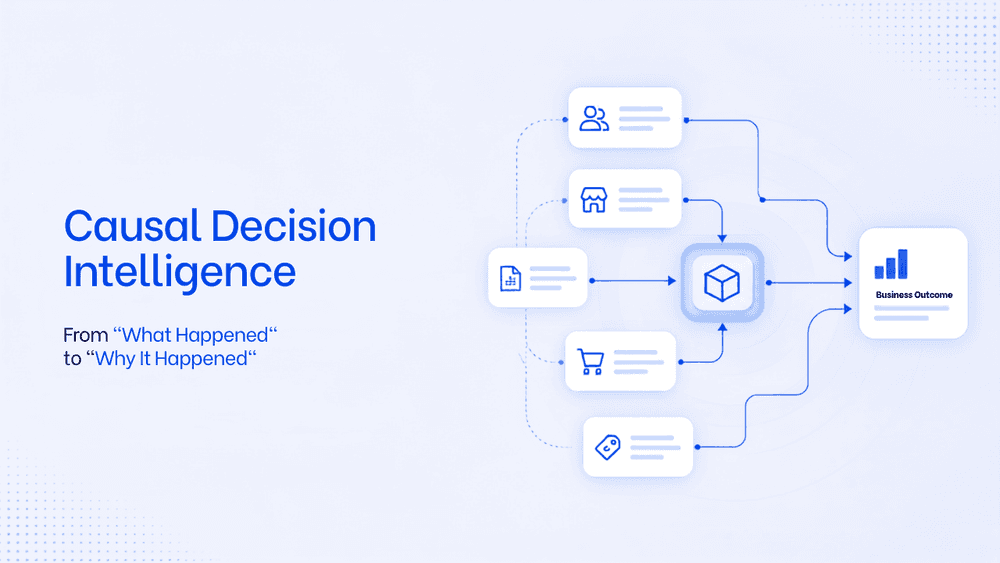
What Is Causal Decision Intelligence? A Framework To Move From "What Happened" to "Why It Happened"
Business intelligence tools are limited in their capability to find the root cause and the trigger behind it. Causal decision intelligence is the AI layer that helps business take faster, smarter decision with an auditable explanation. This will transform the way business analyse data and strategise on teh next actionable steps.

How a Modern Analytics Platform Transforms Business Intelligence
Why faster decision-making, real-time analytics, and AI-driven intelligence separate market leaders from laggards—and how Fire AI closes the gap between data and action.