
Quick answer
Free AI data analytics courses are available on Coursera, edX, Google, and Microsoft Learn — covering data science, machine learning, and business analytics fundamentals. These courses teach Python, SQL, statistics, and AI techniques needed to analyze data effectively, with most offering free audit access and optional paid certificates.
Free AI data analytics courses are available on platforms like Coursera, edX, Google, and IBM. These courses cover data science, machine learning, and AI analytics fundamentals. These free resources help you build foundational knowledge before applying business intelligence and predictive analytics in business contexts.
Free AI data analytics courses provide comprehensive learning resources for understanding how artificial intelligence transforms data analysis. These courses cover machine learning, natural language processing, and predictive analytics fundamentals that form the foundation of modern business intelligence platforms.
What is AI Data Analytics?
AI data analytics combines artificial intelligence techniques with traditional data analysis to uncover insights, patterns, and predictions from data. It uses machine learning algorithms, natural language processing, and automated decision-making to process large datasets that would be impossible for humans to analyze manually.
Key Components of AI Data Analytics
- Machine Learning: Algorithms that learn patterns from data
- Natural Language Processing: Understanding and generating human language
- Predictive Analytics: Forecasting future trends and outcomes
- Automated Insights: AI-generated recommendations and alerts
- Data Visualization: Interactive dashboards and reports
Best Free AI Data Analytics Courses Online
Google Data Analytics Professional Certificate
Platform: Coursera (Google partnership)
Duration: 6 months (10 hours/week)
Skills Covered: Data cleaning, analysis, visualization, SQL, R, Python
Why It's Great: Professional certificate recognized by employers
Cost: Free to audit, $49/month for certificate
IBM Data Science Professional Certificate
Platform: Coursera
Duration: 11 months (10-15 hours/week)
Skills Covered: Python, SQL, data visualization, machine learning, deep learning
Why It's Great: Comprehensive curriculum from industry leader
Cost: Free to audit, $49/month for certificate
Microsoft Azure AI Fundamentals
Platform: Microsoft Learn
Duration: 2-3 weeks
Skills Covered: AI concepts, Azure AI services, responsible AI
Why It's Great: Official Microsoft certification path
Cost: Completely free
Google Machine Learning Crash Course
Platform: Google AI
Duration: 15 hours
Skills Covered: ML fundamentals, TensorFlow basics, neural networks
Why It's Great: Hands-on coding exercises
Cost: Completely free
Free Data Science Learning Paths
DataCamp Free Resources
- Interactive Python tutorials
- SQL fundamentals
- Data visualization with R
- Free daily coding challenges
Kaggle Learn
- Machine learning micro-courses
- Python programming
- Data visualization
- Pandas and NumPy tutorials
FreeCodeCamp Data Analysis
- Python for data analysis
- SQL databases
- Data visualization
- GitHub portfolio projects
YouTube Learning Channels
- freeCodeCamp.org data science playlist
- StatQuest with Josh Starmer
- 3Blue1Brown neural networks
- Corey Schafer Python tutorials
AI Analytics Certification Options
Google Data Analytics Certificate
Focus: Business intelligence and data analysis
Prerequisites: None
Career Outcomes: Data analyst, business analyst roles
Validation: Employer-recognized certificate
IBM Data Science Certificate
Focus: Scientific computing and AI
Prerequisites: Basic programming knowledge
Career Outcomes: Data scientist, ML engineer
Validation: IBM professional certification
Microsoft Azure Certifications
Focus: Cloud-based AI and analytics
Prerequisites: Basic IT knowledge
Career Outcomes: Cloud data engineer, AI specialist
Validation: Microsoft certified
Learning Data Analytics Free: Step-by-Step Guide
Step 1: Build Mathematical Foundations
- Statistics Fundamentals: Mean, median, standard deviation, probability
- Linear Algebra: Matrices, vectors, eigenvalues
- Calculus: Derivatives, integrals, optimization
Step 2: Learn Programming Languages
- Python: Pandas, NumPy, scikit-learn, TensorFlow
- R: Statistical computing, ggplot2 visualization
- SQL: Database querying and management
Step 3: Master Data Handling
- Data Cleaning: Missing values, outliers, normalization
- Data Transformation: Feature engineering, encoding
- Data Storage: Relational databases, NoSQL, data lakes
Step 4: Learn Visualization Techniques
- Matplotlib/Seaborn: Python plotting libraries
- Tableau Public: Free data visualization tool
- Power BI: Microsoft's free tier
- Google Data Studio: Free dashboard creation
Step 5: Study Machine Learning
- Supervised Learning: Regression, classification
- Unsupervised Learning: Clustering, dimensionality reduction
- Deep Learning: Neural networks, CNNs, RNNs
Free Machine Learning Course Recommendations
Andrew Ng's Machine Learning (Stanford)
Platform: Coursera
Duration: 11 weeks
Level: Intermediate
Content: Comprehensive ML algorithms, practical applications
Cost: Free to audit
Deep Learning Specialization (Andrew Ng)
Platform: Coursera
Duration: 5 months
Level: Advanced
Content: Neural networks, CNNs, RNNs, sequence models
Cost: Free to audit, $49/month for certificate
Machine Learning by Columbia University
Platform: edX
Duration: 12 weeks
Level: Intermediate
Content: ML algorithms, model evaluation, real-world applications
Cost: Free to audit, $199 for certificate
Data Analytics Course Free: Career Preparation
Entry-Level Data Analyst
Skills Needed:
- Excel/Google Sheets advanced functions
- SQL for data querying
- Basic statistics and probability
- Data visualization principles
Free Resources:
- Google Sheets advanced tutorials
- SQLZoo interactive exercises
- Khan Academy statistics
- Tableau Public for dashboards
Junior Data Scientist
Skills Needed:
- Python/R programming
- Machine learning fundamentals
- Statistical modeling
- A/B testing and experimentation
Free Resources:
- Python for Everybody (University of Michigan)
- Introduction to Statistics (Stanford)
- Practical Machine Learning (Johns Hopkins)
AI/ML Engineer
Skills Needed:
- Deep learning frameworks
- Cloud AI services
- MLOps and deployment
- Advanced mathematics
Free Resources:
- TensorFlow tutorials
- AWS AI services free tier
- MLOps Zoomcamp (DataTalks.Club)
AI Data Science Course Online: Specialization Tracks
Business Intelligence Track
Focus: Data visualization, dashboard creation, business metrics
Tools: Tableau, Power BI, Google Data Studio
Career Path: BI Analyst, Data Visualization Specialist
Data Engineering Track
Focus: Data pipelines, ETL processes, big data technologies
Tools: Apache Spark, Airflow, Kafka
Career Path: Data Engineer, ETL Developer
Machine Learning Track
Focus: Predictive modeling, algorithms, model deployment
Tools: scikit-learn, TensorFlow, PyTorch
Career Path: ML Engineer, Data Scientist
AI Ethics and Responsible AI Track
Focus: Bias detection, fairness, privacy, governance
Tools: AI fairness toolkits, privacy frameworks
Career Path: AI Ethics Specialist, Responsible AI Lead
Free Data Analytics Certification Programs
Google Career Certificates
- Data Analytics: 6 months, professional certificate
- IT Support: Foundation for data roles
- Project Management: Data project coordination
IBM SkillsBuild
- Data Analysis: Entry-level skills
- Cybersecurity: Data protection focus
- Cloud Computing: AWS/Azure basics
AWS Educate
- Cloud Computing: Free AWS access
- Data Analytics: AWS services for data
- Machine Learning: SageMaker introduction
Microsoft Learn
- Azure Fundamentals: Cloud basics
- Power BI: Business intelligence
- Azure AI: AI and ML services
Learning Platforms Comparison
Coursera
Pros: University courses, certificates, peer learning
Cons: Limited free access, subscription required for certificates
Best For: Structured learning, career certificates
edX
Pros: University partnerships, verified certificates
Cons: Some courses require payment
Best For: Academic rigor, professional development
Udacity
Pros: Nanodegree programs, project-based learning
Cons: Paid programs, limited free content
Best For: Hands-on projects, career advancement
YouTube/Free Resources
Pros: Completely free, diverse content
Cons: Unstructured, quality varies
Best For: Supplementary learning, quick concepts
Building a Personal Learning Roadmap
Assess Your Current Skills
- Beginner: Start with Excel, basic statistics
- Intermediate: Learn Python, SQL, basic ML
- Advanced: Deep learning, cloud AI, MLOps
Set Clear Goals
- Short-term: Complete 1-2 courses in 3 months
- Medium-term: Build portfolio projects
- Long-term: Obtain certifications, apply for jobs
Create a Study Schedule
- Daily: 1-2 hours of learning
- Weekly: Complete assignments/projects
- Monthly: Review progress, adjust goals
Track Your Progress
- Portfolio: GitHub repositories, personal projects
- Certifications: Professional validations
- Skills Assessment: Test knowledge regularly
Common Challenges and Solutions
Staying Motivated
Problem: Free courses lack accountability
Solutions:
- Join study groups on Discord/Reddit
- Set weekly milestones
- Share progress on LinkedIn
Information Overload
Problem: Too many resources, unclear priorities
Solutions:
- Follow structured learning paths
- Focus on one topic at a time
- Use curated resource lists
Skill Gaps
Problem: Missing foundational knowledge
Solutions:
- Take prerequisite courses first
- Use Khan Academy for basics
- Join communities for help
Time Management
Problem: Balancing learning with work/life
Solutions:
- Set realistic daily goals
- Use micro-learning (15-30 minutes)
- Schedule learning like appointments
Future of Free AI Data Analytics Education
Emerging Trends
- AI-Powered Learning: Personalized learning paths
- Virtual Reality: Immersive data visualization training
- Blockchain Credentials: Decentralized certification
- Gamification: Interactive learning experiences
Industry Changes
- Remote Learning: Increased online education access
- Micro-Credentials: Short, focused skill certifications
- Lifelong Learning: Continuous skill development
- AI-Assisted Learning: Intelligent tutoring systems
New Platforms
- LinkedIn Learning: Professional skill development
- Codecademy: Interactive coding courses
- DataQuest: Data science specializations
- Towards Data Science: Community-driven learning
From Learning to Doing: Apply Analytics Skills with FireAI
Courses teach theory, but real learning happens when you apply concepts to actual business data. FireAI bridges this gap for Indian professionals:
Practice on Real Business Data
Instead of toy datasets, connect your company's Tally, Google Sheets, or database to FireAI and start analysing real business data. Ask questions in plain English — "What was our revenue growth rate last quarter?" — and see how AI translates natural language into SQL queries. This is hands-on learning with immediate business value.
No-Code Path to Analytics
Not everyone needs to learn Python or SQL. FireAI's no-code analytics lets business professionals apply analytical thinking without programming. A CA in Mumbai can connect client Tally data and generate P&L dashboards in minutes — no code, no training beyond asking questions in English or Hindi.
Indian-Specific Learning Context
While most free courses use US-centric examples, FireAI helps Indian learners apply analytics to Indian business contexts — GST reconciliation, Tally ledger analysis, lakh/crore formatting, and Indian fiscal year (April–March) conventions. A ₹10 crore SMB owner learns more from analysing their own Tally data than from a Coursera exercise on the Iris dataset.
Recommended Learning Path for Indian Professionals
- Week 1–4: Complete Google Data Analytics Certificate fundamentals (free audit)
- Week 5–6: Learn basic SQL on SQLZoo or Khan Academy
- Week 7–8: Connect your business data to FireAI and start asking analytical questions
- Week 9–12: Build dashboards and automate reports for your team using FireAI's pre-built templates
- Ongoing: Deepen skills with Andrew Ng's ML course while applying insights daily through NLQ
Free courses provide the foundation. Tools like FireAI provide the application layer where learning becomes business impact.
Ready to act on your data?
See how teams use FireAI to ask in plain language and get analytics they can trust.
Explore FireAI workflows
Go from this topic into product features and solution paths that match what you read here.
Topic hub
AI Analytics
Guides on natural language querying, AI-powered analytics, forecasting, anomaly detection, and automated insights.
Explore hubFrequently asked questions
Related in this topic
AI Analytics Use Cases: Real-World Examples
Explore proven AI analytics use cases across manufacturing, retail, healthcare, and finance. See how companies use AI to automate insights and drive decisions.
What is No-Code Analytics? Definition, Tools, and Benefits
No-code analytics lets business users analyse data, build dashboards, and generate insights without writing SQL or code. Learn what no-code analytics tools are, how they work, and which platforms offer no-code BI for Indian businesses.
What is Business Intelligence? Definition and Benefits
Business intelligence (BI) combines data analysis, visualization, and reporting to transform raw data into actionable insights. Learn how BI systems work, which tools to use, and how they enable data-driven decision-making.
What is Predictive Analytics? Methods and Examples
Predictive analytics uses statistical algorithms and machine learning to forecast future outcomes based on historical data. Learn how predictive modeling works, which methods are used, and how businesses apply it for sales forecasting, risk management, and strategic planning.
From the blog
Democratizing Data: How AI Analytics Levels the Playing Field for Small Businesses and Freelancers
For decades, data-driven decision making was a luxury that only enterprises could afford. Big companies hired data scientists, purchased expensive BI tools, and built complex data warehouses. In exchange, they received precise insights that guided budgets, strategy, and growth.
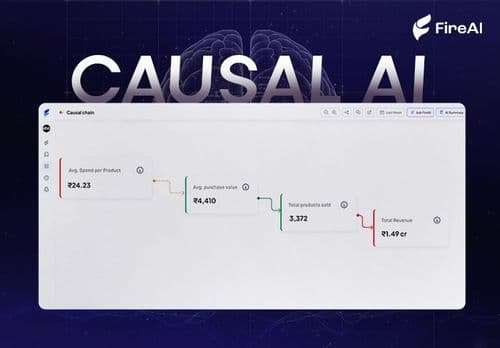
Causal AI Explained: Uncovering the “Why” in Data with Machine Learning
Causal AI reveals not just what will happen, but why — and exactly what changes if you act differently. It turns predictions into high-ROI decisions by uncovering true cause-and-effect in your data.

Closing the Data Decision-Making Gap in Indian Business
Learn how the data decision-making gap stalls growth in Indian enterprises and how causal decision intelligence bridges the analytics gap for teams.