
Quick answer
Conversational analytics is an AI-powered approach to business intelligence that lets users analyze data by asking questions in plain English (or other natural languages). Instead of writing SQL or using complex BI tools, you simply type or speak questions like "What were our top-selling products last month?" and get instant answers with charts. It works like ChatGPT but for your business data—democratizing analytics for non-technical users.
"What if you could talk to your data like you talk to ChatGPT?"
That's conversational analytics—business intelligence that understands plain English questions and responds with instant insights.
Instead of writing SQL code, you simply ask: "Which product categories made the most money last month?"
And you get an instant answer with charts—no SQL, no BI training, no data analyst required.
What is Conversational Analytics?
Conversational analytics is an AI-powered approach to business intelligence that lets you analyze data by asking questions in natural language—just like chatting with a colleague.
Think of it as "ChatGPT for your business data"—you ask questions in plain English, and AI generates insights, charts, and answers automatically.
How It Works:
Conversational analytics combines artificial intelligence, natural language processing, and business intelligence to create an intuitive interface for data exploration. The technology works by:
- Understanding your question using natural language query (NLQ) technology
- Converting it to SQL automatically behind the scenes
- Presenting results through data visualization and business dashboards
- Executing the query against your database
- Presenting results with visualizations and plain-language explanations
This approach transforms complex data analysis from a specialized skill into an everyday business capability accessible to everyone.
How Conversational Analytics Works
Natural Language Processing (NLP)
The system uses advanced NLP algorithms to understand user intent, context, and business terminology. This goes beyond simple keyword matching to comprehend complex queries involving time periods, comparisons, and business metrics.
Schema-Aware Query Generation
Unlike generic chatbots, conversational analytics platforms maintain deep awareness of data structures, relationships, and business rules. This ensures that generated queries are accurate and respect data integrity constraints.
Contextual Understanding
The platform maintains conversation history and business context, allowing for follow-up questions like "How does that compare to last year?" without re-establishing context.
Multi-Modal Responses
Results are presented through multiple formats: charts, tables, KPIs, and natural language summaries, ensuring insights are both comprehensive and easily consumable.
Key Benefits of Conversational Analytics
Democratization of Data
Universal Access: Business users, executives, and analysts can all interact with data using familiar language patterns. This eliminates the bottleneck of technical expertise.
Faster Insights: Questions that once took days to answer through IT requests now return results in seconds. This accelerates decision-making across all levels of the organization.
Enhanced Productivity
Reduced Query Time: What previously required writing and debugging SQL queries now happens through simple conversation. This can reduce analysis time by 70-90%.
Iterative Analysis: Users can easily refine their questions and drill down into details, exploring data relationships that might not have been initially obvious.
Improved Accuracy
Error Reduction: Automated query generation eliminates syntax errors and reduces the risk of incorrect data interpretation.
Consistency: Standardized query patterns ensure that similar questions receive consistent answers across different users and time periods.
Conversational Analytics vs Traditional BI
| Aspect | Traditional BI | Conversational Analytics |
|---|---|---|
| Query Interface | SQL/Visual Query Builder | Natural Language |
| User Expertise | SQL Knowledge Required | Business Knowledge Sufficient |
| Time to Insight | Hours to Days | Seconds to Minutes |
| User Adoption | Limited to Technical Users | Organization-Wide |
| Query Flexibility | Pre-defined Reports | Ad-hoc Exploration |
| Learning Curve | Weeks to Months | Minutes to Hours |
Real-World Applications
Sales Performance Analysis
Question: "Which products had the highest growth last quarter?"
Benefit: Sales teams can quickly identify winning products and adjust strategies without waiting for IT.
Customer Behavior Insights
Question: "What changed in customer purchasing patterns after our last promotion?"
Benefit: Marketing teams can measure campaign effectiveness and optimize future promotions in real-time.
Operational Efficiency
Question: "Where are we experiencing the most production delays this month?"
Benefit: Operations teams can identify and address bottlenecks before they impact delivery schedules.
Implementation Considerations
Data Governance
While conversational analytics democratizes data access, it's crucial to maintain proper governance. Role-based access controls and data classification ensure users only see authorized information.
Data Quality
The accuracy of conversational analytics depends on underlying data quality. Clean, well-structured data sources produce more reliable insights.
Integration Strategy
Successful implementation requires integration with existing data sources, user training, and change management to ensure adoption across the organization.
Future of Conversational Analytics
AI-Powered Insights
Next-generation platforms will not just answer questions but proactively identify patterns, anomalies, and opportunities that users might not have thought to explore.
Voice-Enabled Analytics
Integration with voice assistants will enable hands-free data exploration, particularly valuable for mobile and field-based workers.
Multi-Modal Intelligence
Combining conversational interfaces with computer vision and IoT data will create richer, context-aware insights.
Choosing a Conversational Analytics Platform
When evaluating conversational analytics solutions, consider:
- Natural Language Understanding: How well does it handle complex business terminology and context?
- Data Source Support: Which databases, cloud platforms, and file formats are supported?
- Security and Governance: What controls exist for data access and compliance?
- Integration Capabilities: How easily does it connect with existing BI tools and workflows?
- Scalability: Can it handle enterprise-scale data volumes and user loads?
Conversational analytics represents the future of business intelligence, making data-driven decision making accessible to everyone while dramatically accelerating the insight-to-action cycle.
Ready to act on your data?
See how teams use FireAI to ask in plain language and get analytics they can trust.
Explore FireAI workflows
Go from this topic into product features and solution paths that match what you read here.
Topic hub
AI Analytics
Guides on natural language querying, AI-powered analytics, forecasting, anomaly detection, and automated insights.
Explore hubFrequently asked questions
Related in this topic
Can AI Do Data Analytics? Examples, Capabilities and Limits
Yes, AI can perform sophisticated data analytics including pattern recognition, predictive modeling, and automated insights generation. Learn how AI does data analytics, which capabilities it provides, and see examples of AI-powered business intelligence.
What is Demand Forecasting? Methods and AI Techniques
Demand forecasting uses historical sales data and statistical or AI models to predict future product demand. Learn the key methods — time series, causal, and machine learning — and how tools like FireAI automate demand planning directly from Tally and DMS data.
Ask Questions to Your Data — No SQL Required
Type a question like "what were last month's top products?" and get instant answers from your database. Learn how NLQ tools work, 20 example queries, and which platforms support it.
Free AI Data Analytics Course: Resources & Certifications
Discover free AI data analytics courses, online certifications, and learning resources. Learn data science, machine learning, and AI analytics with free courses from Coursera, edX, Google, and IBM.
From the blog
What Is a Data Silo and Why Is It Slowing Down Your Business?
Data silos are silently costing Indian businesses time, money and decisions. Here is what they are, why they form and how to break them for good with FireAI.
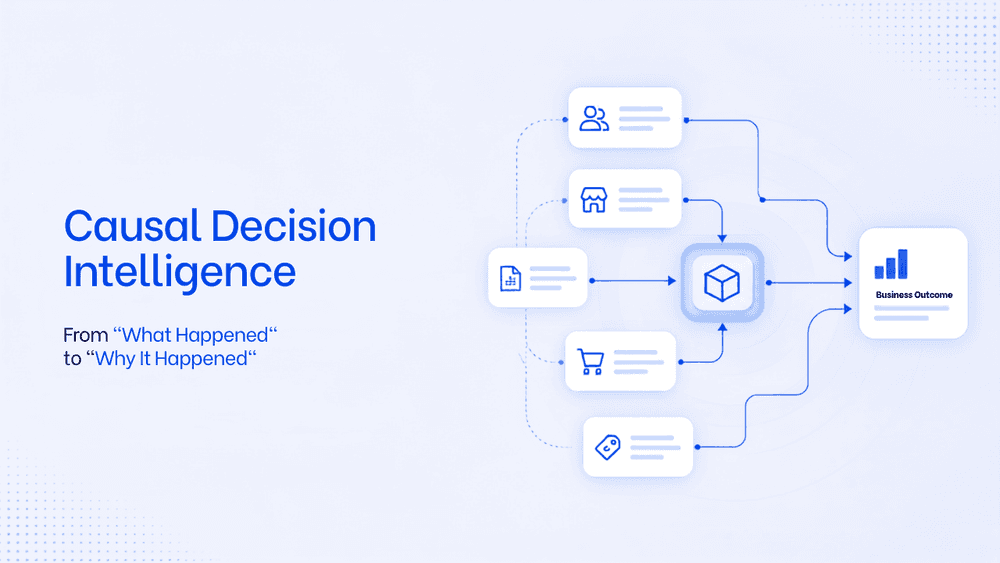
What Is Causal Decision Intelligence? A Framework To Move From "What Happened" to "Why It Happened"
Business intelligence tools are limited in their capability to find the root cause and the trigger behind it. Causal decision intelligence is the AI layer that helps business take faster, smarter decision with an auditable explanation. This will transform the way business analyse data and strategise on teh next actionable steps.

How a Modern Analytics Platform Transforms Business Intelligence
Why faster decision-making, real-time analytics, and AI-driven intelligence separate market leaders from laggards—and how Fire AI closes the gap between data and action.